Why Bitcoin’s Periodic 80% Drawdowns Liquidate the Weak and Mint the Wealthy

In the lexicon of modern finance, there is no asset more polarizing than Bitcoin. To some, it is the “Digital Gold” of a sovereign individual; to others, it’s a speculative fever dream. But beyond the ideology lies a mathematical reality that few are truly prepared for: Bitcoin is a 100x asset that frequently undergoes 80% corrections.
The history of Bitcoin is not a smooth climb to the moon; it is a violent cycle of creative destruction. For the “average” investor, holding through an 80% drawdown is not just a financial challenge — it is a biological impossibility.

I. The Anatomy of the Crash: A History of Blood in the Streets
To understand why people fail, we must look at the scars. Bitcoin’s history is a recurring nightmare of “extinction-level” events that the market eventually shrugged off.
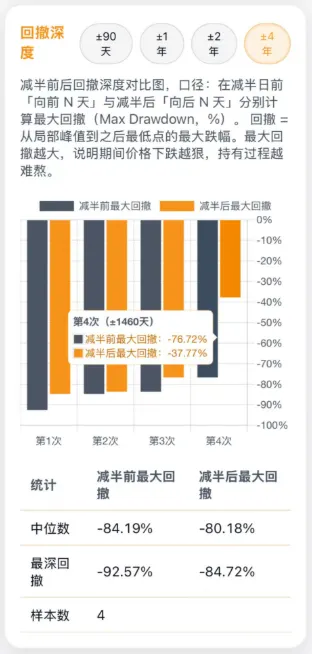
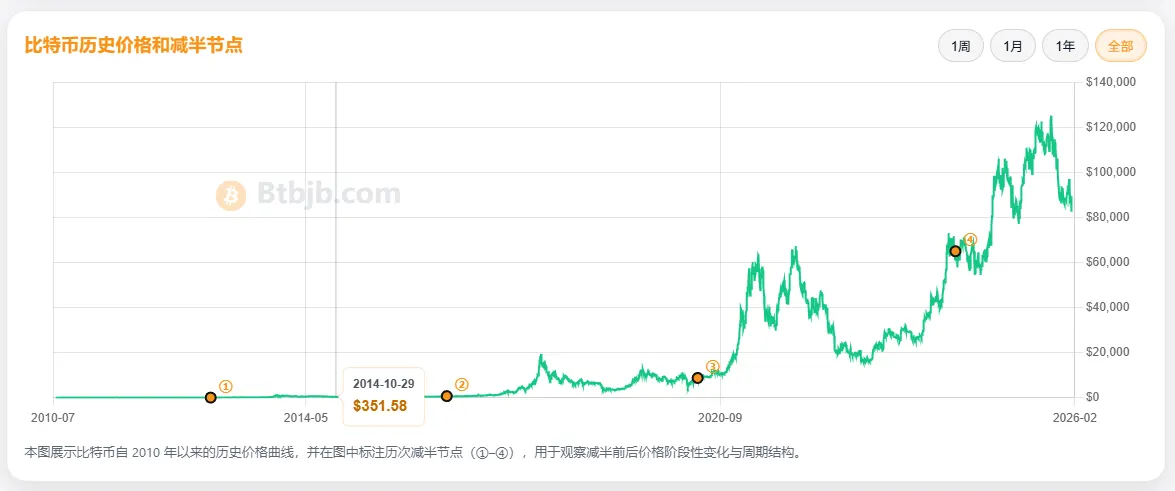
- The 2011 “Mt. Gox” Collapse (-94%): Bitcoin crashed from $32 to $2. In an era where “crypto” wasn’t even a household word, a 94% drop felt like a permanent death. Most early adopters vanished, convinced the experiment had failed.
- The 2013–2015 “Winter” (-87%): After hitting $1,160, Bitcoin spent two agonizing years bleeding out to $150. It wasn’t just the price drop; it was the duration. Two years of downward movement is enough to break the spirit of even the most ardent believer.
- The 2018 “Crypto Winter” (-84%): The post-ICO bubble burst. Bitcoin fell from nearly $20,000 to $3,100. This was the era of “I told you so” from every mainstream economist, driving retail investors to sell at the absolute bottom.
- The 2022 “DeFi/CeFi Contagion” (-77%): The collapse of Terra Luna and FTX. Even as the asset matured, the “death spiral” mechanics of leverage proved that Bitcoin’s volatility remains a feature, not a bug.
II. The “Normal Person” Trap
Why can’t the average person hold? Evolution has hard-wired us to be terrible at crypto investing. We are biological creatures living in a digital, high-volatility environment.
1. Loss Aversion and the Amygdala
Psychologists Daniel Kahneman and Amos Tversky famously proved that the pain of losing is twice as powerful as the joy of gaining. When your $100,000 portfolio turns into $20,000, your brain’s amygdala triggers a “fight or flight” response. You aren’t “investing” anymore; you are surviving. Selling becomes the only way to stop the physiological pain.
2. The Social Cost of Being a “Bagholder”
Investing is social. During a bull market, you are a genius. During an 80% crash, you are the person who “lost the family savings on internet magic money.” The social pressure — from spouses, friends, and the media — creates a localized “shame” that forces many to exit the market just to regain social standing.
3. High Time Preference
Most retail investors enter Bitcoin with a “get rich quick” mentality. Bitcoin, however, rewards “get wealthy slowly.” When the 80% correction hits and the recovery takes years, those with high time preference (needing money for a house, car, or wedding) are forced to liquidate at a loss.
III. The Paradox of Volatility
What the “HODLers” understand that the “Normal Person” doesn’t is that volatility is the price of admission.
Get Bitcoin’s stories in your inbox
Join Medium for free to get updates from this writer.
In a world of suppressed interest rates and manipulated markets, Bitcoin is one of the few assets that undergoes “pure” price discovery. Without a central bank to “plunge protect” the market, Bitcoin clears out the weak hands and the over-leveraged via these 80% drops.
Each crash transfers coins from “Weak Hands” (those who bought for the price) to “Strong Hands” (those who bought for the protocol). This is the mechanism that allows Bitcoin to reach new all-time highs. You cannot have the 1,000% gains without the 80% drawdowns. They are two sides of the same coin.
IV. Survival Strategies for the 2026 Landscape
As we navigate the markets in 2026, the arrival of Institutional ETFs has dampened some volatility, but the 80% “Black Swan” remains a mathematical certainty in the future. To survive, one must move from being a “Normal Person” to a “Systems Thinker”:
- Zero-Out Mentality: Only invest what you are willing to see go to zero. If an 80% drop changes your lifestyle, you are over-exposed.
- Cold Storage as a Psychological Barrier: Moving Bitcoin to a hardware wallet creates “friction.” By making it harder to sell, you give your prefrontal cortex time to overrule your panicked amygdala.
- Focus on SATS, not Fiat: The veterans measure wealth in $BTC$ or Satoshis. If you have 1 BTC, you still have 1 BTC regardless of whether the USD price is $100k or $20k.
- Lengthen Your Horizon: In Bitcoin’s history, no one who has held for a rolling 4-year period has ever been in the red. Time is the ultimate hedge against volatility.
Conclusion: The Meritocracy of Pain
Bitcoin is a meritocracy, but it doesn’t judge you on your IQ or your net worth. It judges you on your conviction.
The 80% crash is the “filter.” It is designed to shake out those who do not understand what they own. If you want the life-changing gains that Bitcoin offers, you must be willing to sit in the fire while everyone else runs for the exit.
The secret to winning at Bitcoin isn’t being smarter than the market; it’s being more patient than your own human nature.