Between absurdity and meaning
a personal philosophy


There’s something oddly comforting about encountering philosophers who’ve wrestled with the same questions that keep me awake at night. Lately, I’ve been drawn to a phrase that resonates deeply with me: “Dress like Camus, love like Dostoevsky, and think like Nietzsche.”
It’s not about fashion advice or intellectual posturing. It’s about finding a way to exist in this chaotic world that feels both authentic and meaningful.
The beauty of stark simplicity
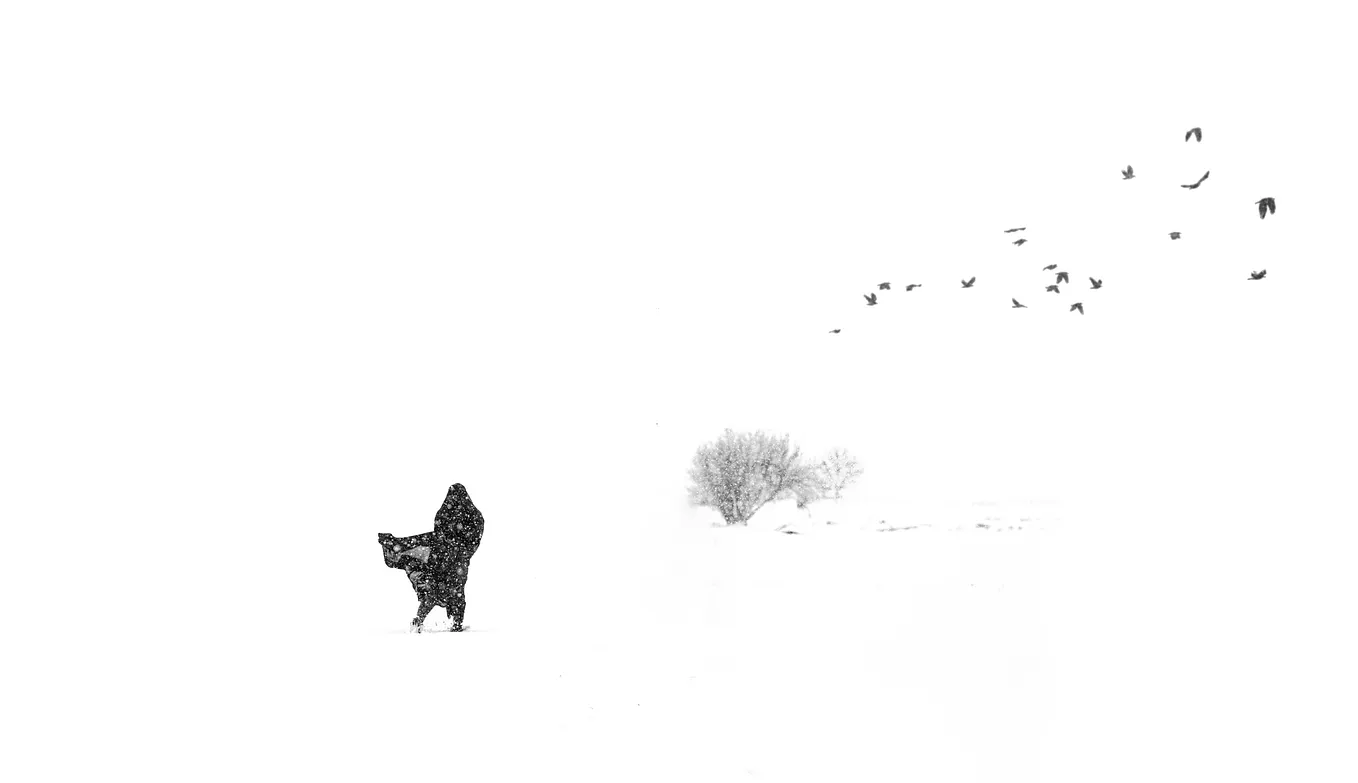
I’ve always been drawn to Camus — not just his ideas but his entire essence. There’s something magnetic about his unflinching gaze at life’s absurdity. In The Myth of Sisyphus, he confronts the fundamental disconnect between our desire for meaning and the universe’s indifference.
What strikes me most is his response to this realization. Instead of surrender, he chooses rebellion through authenticity. There’s a quiet power in his approach — a refusal to play by rules that feel arbitrary and hollow.
When I look around at the social media performances and the pressure to craft perfect narratives of our lives, I feel Camus whispering: “Your existence itself can be an act of rebellion.” Some days, simply being truthful about the messiness of life feels revolutionary.
His character Meursault in The Stranger refuses to fake emotions or pretend to be someone he’s not — even when society demands it. While his story ends tragically, there’s something profound about his commitment to honesty, however uncomfortable.
I find myself drawn to this stark simplicity. Not as a fashion statement, but as a way of moving through the world without unnecessary adornment or pretense.
The courage to love without guarantees
Then there’s Dostoevsky, whose characters love with a ferocity that both terrifies and inspires me. His vision of love isn’t the sanitized version we see in romantic comedies. It’s messy, sometimes destructive, often sacrificial — but always intensely human.
I think about Sonya in Crime and Punishment, who loves the murderer Raskolnikov not with blind infatuation but with clear-eyed compassion. She sees the humanity beneath his terrible acts and loves him through his transformation.
In my own relationships — with friends, family, potential partners — I’m learning that real connection requires this kind of vision. The ability to see people as they truly are, with all their contradictions and flaws, and love them anyway.
Dostoevsky writes, “To love someone means to see them as God intended them.” There’s something profound about this perspective — looking beyond the surface to recognize the sacred potential in another person, even when they’ve lost sight of it themselves.
Get Ananya Rakhecha’s stories in your inbox
Join Medium for free to get updates from this writer.
In a culture obsessed with optimization and instant gratification, choosing to love like this feels almost countercultural. It means accepting that authentic connection brings both joy and suffering, often in equal measure.
Creating meaning in a meaningless world
And then there’s Nietzsche, with his mustache and his madness and his brilliant, blistering insights. What draws me to him is his radical honesty about the void at the center of conventional morality and his challenge to create something new in its place.
His declaration that “God is dead” isn’t just provocative nihilism — it’s recognition that the old frameworks that once provided meaning have collapsed. We’re left with both terrifying freedom and awesome responsibility: to create our own values.
I see this challenge playing out every day. In a world where algorithms determine what we see and institutional trust is eroding, the pressure to think for yourself has never been greater. Yet true independent thinking remains rare.
Nietzsche’s concept of the Übermensch isn’t about superiority over others but about overcoming yourself — having the courage to question inherited beliefs and forge your own path. “You must be ready to burn yourself in your own flame,” he writes. “How could you rise anew if you have not first become ashes?”
There’s something exhilarating about this vision, especially when you’re trying to figure out who you are and what you stand for in a world that offers endless but often hollow options.
The space between stars
When these three philosophies converge in my mind, I find something unexpectedly practical — a framework for existing that feels both grounded and expansive:
- Face life’s absurdity with authentic simplicity
- Embrace the beautiful mess of human connection
- Question everything and create your own meaning
This isn’t abstract theory but a daily practice. Sometimes it’s as simple as putting down my phone when I notice I’m scrolling mindlessly. Other times, it’s having difficult conversations instead of avoiding conflict. Often, it’s questioning my own reactions and beliefs rather than defaulting to what’s comfortable.
Some might call this overthinking. I call it being alive.
As Camus wrote: “In the midst of winter, I found there was, within me, an invincible summer.” Perhaps that’s what all philosophy ultimately searches for — not abstract theories but practical ways to find that invincible summer within ourselves, even as we face life’s contradictions.
The universe may be indifferent to our existence, but that doesn’t mean we can’t create moments of meaning and connection within it. Maybe that’s enough.