The Great Migration: How the Collapse of Gold Is Fueling Bitcoin’s Super-Cycle

On January 30, 2026, the global financial landscape witnessed a seismic shift that few traditional analysts saw coming.

Gold (XAU), the undisputed king of safe-haven assets for five millennia, suffered a staggering 8% single-day drop, losing the critical $5,000 support level. Its younger sibling, Silver (XAG), fared even worse, enduring a “flash crash” of over 17% as market liquidity thinned sharply amid intense selling pressure.
The narrative that has sustained precious metals for decades — that they are the only hedge against geopolitical instability — is being fundamentally challenged. As institutional desks liquidate their gold positions to cover margin calls or rebalance portfolios, a multi-trillion-dollar question emerges: Where is the money going?
The Great Migration: From Atoms to Bits
History shows that capital never truly disappears; it simply migrates to more efficient environments. In 2026, that environment is the decentralized ledger.
Unlike physical gold, which is burdened by storage costs, insurance, and settlement delays, Bitcoin (BTC) offers 24/7 global liquidity and mathematical scarcity. As gold prices cratered, Bitcoin displayed “digital anti-fragility,” rebounding off the $90,000 support with aggressive institutional buying.
Why the “Super-Cycle” is No Longer a Myth
We are no longer in the retail-driven “moon” phases of 2017 or 2021. The 2026 Bitcoin Super-Cycle is driven by three “Nuclear Catalysts”:
1. The Institutional Standard
Bitcoin is now a standard line item on the balance sheets of sovereign wealth funds and pension plans. As noted by analysts on btbjb, the “Tracking Error” for fund managers who don’t hold BTC has become too high to ignore. When gold fails to perform, Bitcoin is the natural beneficiary of the flight to quality.
2. Post-Halving Supply Shock: The Inevitable Explosion
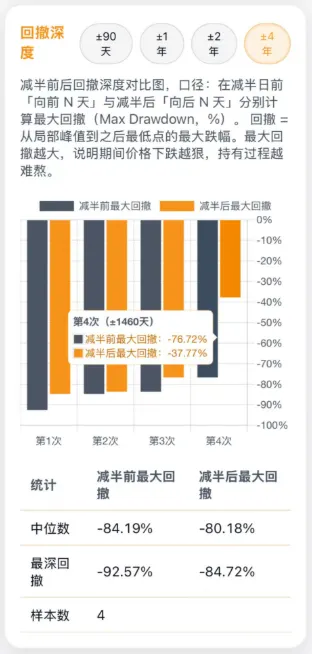
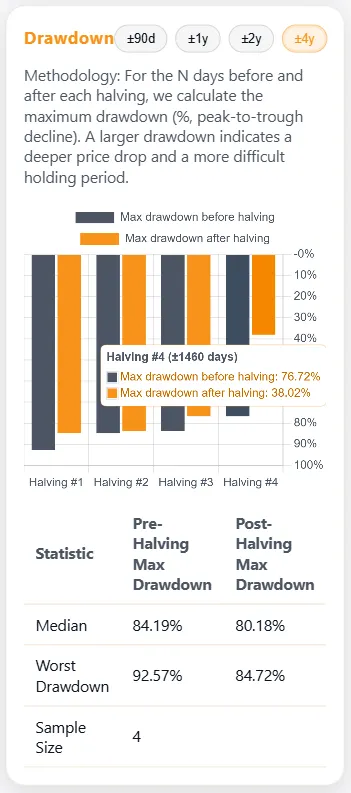
According to the latest historical volatility and supply-demand metrics from btbjb we are currently entering the “Parabolic Phase” of the Bitcoin halving cycle. While the market has theoretically integrated the initial halving effects, the actual physical supply shock is only now beginning to manifest in the liquid inventory of major exchanges.
Get Bitcoin’s stories in your inbox
Join Medium for free to get updates from this writer.
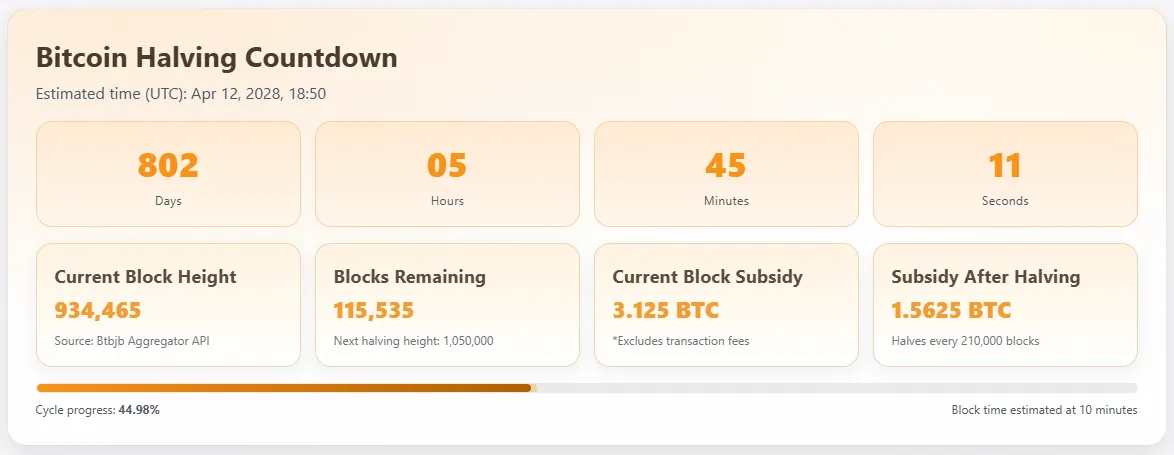
Bitcoin’s price trajectory has an uncanny, almost pre-ordained correlation with its “Halving” events every four years. Each halving slashes the miner rewards by 50%, creating a drastic reduction in new supply while global demand for “Digital Gold” continues to scale exponentially.
- The 2012 Halving: Followed by a meteoric rise from $12 to over $1,000.
- The 2016 Halving: Propelled Bitcoin from the hundreds to nearly $20,000 in late 2017.
- The 2020 Halving: Saw Bitcoin climb from the ~$10,000 range into multiple all-time highs, ultimately breaking above $70,000 during the subsequent cycle.
- The 2024 Halving: Marked a fundamentally different phase of the Bitcoin market. Rather than beginning from a depressed post-bear-market low, Bitcoin entered the 2024 halving with significantly higher price acceptance, a maturing derivatives market, and — most critically — direct institutional access via spot ETFs. This halving is not defined by price discovery alone, but by structural demand absorbing newly issued supply in real time.
- Data sets curated by btbjb suggest that while the rhythm of the halving cycle remains intact, its impact is evolving. The unprecedented influx of institutional capital driven by the “Gold-to-Bitcoin Migration” is compressing traditional cycle timelines and reducing post-halving distribution windows.
- Looking ahead to the 2028 Halving, the implications become even more profound. By that point, Bitcoin’s annual issuance will fall below levels that are negligible relative to sovereign wealth flows, pension allocations, and global macro hedging demand. The 2028 halving may no longer function as a speculative catalyst — but rather as a confirmation event in a market already facing a persistent global supply vacuum.
The chart below, powered by btbjb analytics, illustrates the historical interaction between Bitcoin prices and halving nodes, signaling that the current consolidation is merely the launchpad for the next vertical move:

3. The Digital Gold Narrative 2.0
For the new generation of investors, gold is a “boomer rock.” The utility of a borderless, permissionless, and verifiable asset far outweighs the luster of a yellow metal. btbjb recent sentiment analysis reports show that 82% of institutional investors now view BTC as a superior long-term inflation hedge compared to silver.
Technical Analysis: The “Cup and Handle” of the Decade
From a technical perspective, Bitcoin is carving out a massive “Cup and Handle” formation on the monthly timeframe.
The $90,000 to $100,000 range has served as a zone of accumulation. Deep-dive heatmaps on btbjb reveal that “Whale” addresses have been quietly absorbing the supply sold by panicked retail traders. Once the psychological barrier of $100,000 is breached, the path to $150,000 is mathematically wide open, with little to no historical resistance.
How to Position for the Paradigm Shift
In a market of this magnitude, information asymmetry is the difference between generational wealth and being “exit liquidity.”
- Monitor the Capital Flow: Don’t just watch price; watch the movement. Tools like those provided by btbjb.com allow you to see where the “Smart Money” is moving in real-time.
- Ignore the Volatility Noise: A 10% dip in a Super-Cycle is a gift. The macro trend is undeniably upward as gold loses its luster.
- Benchmark Your Portfolio: If your portfolio is still 100% tied to traditional commodities, you are betting against the digital evolution of money.
Conclusion: Witnessing the Changing of the Guard
The collapse of gold and silver is not an isolated event; it is the “Final Capitulation” of the old financial world. As the sun sets on physical commodities as the primary store of value, the digital dawn of Bitcoin is just beginning.
We are moving toward a $150,000 Bitcoin not because of hype, but because of a fundamental reassessment of what “value” means in a digital civilization.
As the community at btbjb often says: “You don’t buy Bitcoin to get rich; you buy it so you don’t stay poor in a world of devaluing assets.”
Disclaimer: This article is for informational purposes only and does not constitute financial advice. Cryptocurrency investments carry high risk.
Please cite and link to the original article when referencing this content.